
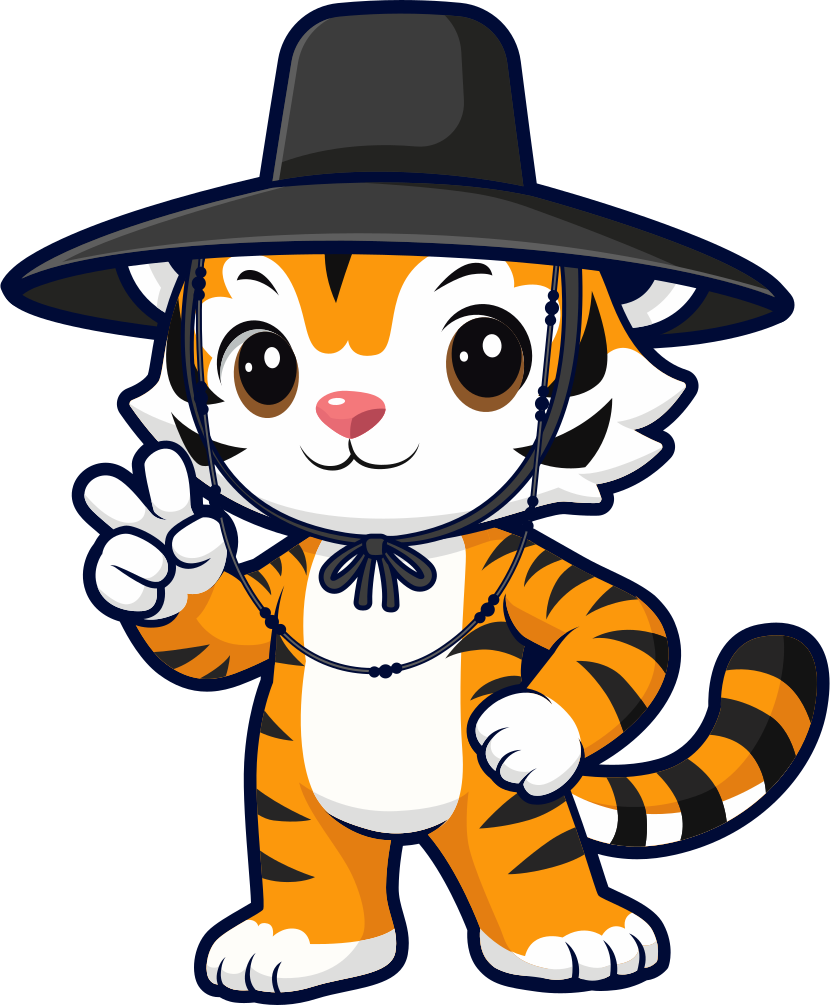
한구랑 Hangurang
The Korean-Speaking Tiger
Origin Story
Long ago in the mountains of Korea, during the Joseon dynasty, there lived a tiger cub who was different from the others.
While his brothers and sisters played in the pine forests, this cub sat by the village edge, where the pine forest met the mountain path, and listened. He listened to the merchants calling out prices at the market. He listened to grandmothers singing old folk songs. He listened to children reciting Hangeul for the first time.
One spring day, a different sound came down the mountain path — the steady footsteps of an old scholar wearing a gat — a wide-brimmed traditional Korean hat. The scholar stopped. He watched the cub listening. After a moment, the cub turned and noticed him.
"You listen well," the scholar said. "That is the first step."
He placed his gat on the cub's head. It was too big, sliding down over his ears. The cub laughed — and then, for the first time, spoke in Korean:
안녕하세요
The scholar smiled. "Now you have taken the second step."
The cub never stopped. He learned every word, every grammar pattern, every song, and saying. He learned that language is not just words — it is culture, history, and the connection between people. And now he travels the world, teaching anyone who will listen.
His name became Hangurang.
Meet Hangurang
Hangurang is the mascot of Korean Easy. Patient, curious, and always ready with a peace sign, he guides you from your first greeting to full conversations. He wears the traditional Korean gat — the wide-brimmed hat of Joseon-era scholars — because learning a language is one of the most meaningful things a person can do. He takes that seriously, while never making it feel like hard work.
The Name
Hangurang combines three Korean sounds, each carrying its own meaning.
한
Han
Korean — from hanguk (Korea) and hangeul (the alphabet)
구
Gu
Voice, the act of speaking — from Hanja 口 (mouth)
랑
Rang
Tiger — from horangi, the Korean tiger
"The Korean-speaking tiger" — a tiger who gives voice to the Korean language.
Personality
Curious
Always discovering something new about language and culture. He never treats a question as too basic.
Encouraging
He celebrates small wins. Saying your first Korean word is as exciting to him as reading your first full sentence.
Patient
He knows language learning is hard. He has been there. He never rushes.
Playful but grounded
He has the energy of a cub and the wisdom of a scholar. The gat is not just a costume — represents that learning deserves respect.
Proud of Korean culture
Not in an exclusive way. He wants to share it. The more people who understand Korean, the happier he is.
A friend, not a professor
He is learning alongside you in spirit even when he already knows the answer. He never talks down to the learner.